
In the era of rapid digitalization, smart technology has become an integral part of everyday life. Revolutionary advancements in Artificial Intelligence (AI), the Internet of Things (IoT), and Big Data have not only transformed how we work and communicate but also opened up new opportunities in the field of education. Smart education—the fusion of technology and pedagogy—is creating breakthroughs in learning, enabling children to engage and develop in a digitalized environment.
The future of our younger generation is closely intertwined with the digital age, and it is through the application of smart technology in education that we are bringing children closer to the digital future. This article will analyze the importance of smart technology in education and how it is preparing today’s youth for the digital world.
Transformation in education through smart technology
The development of technology has not only improved educational infrastructure but also created new ways of learning. Smart education is the integration of cutting-edge technology and innovative teaching methods to optimize the learning process for students. Tools such as interactive smartboards, virtual classrooms, and intelligent learning software have become indispensable components of the modern education environment.
- Interactive smartboards and virtual classrooms:
Traditional whiteboards have been replaced with interactive smartboards, equipped with internet connectivity and digital content. Children can directly interact with the material through touchscreens, making learning more dynamic and visually engaging. Virtual classrooms, in particular, have addressed geographic barriers, allowing students from anywhere to participate in lessons remotely without needing to be physically present. - Personalized learning software:
One of the biggest benefits of AI in education is its ability to create personalized learning experiences. AI can track each student’s learning progress, identify strengths and weaknesses, and recommend tailored content to meet individual needs. This not only helps students learn more efficiently but also encourages self-confidence and independence in their learning journey. - Virtual Reality (VR) and Augmented Reality (AR):
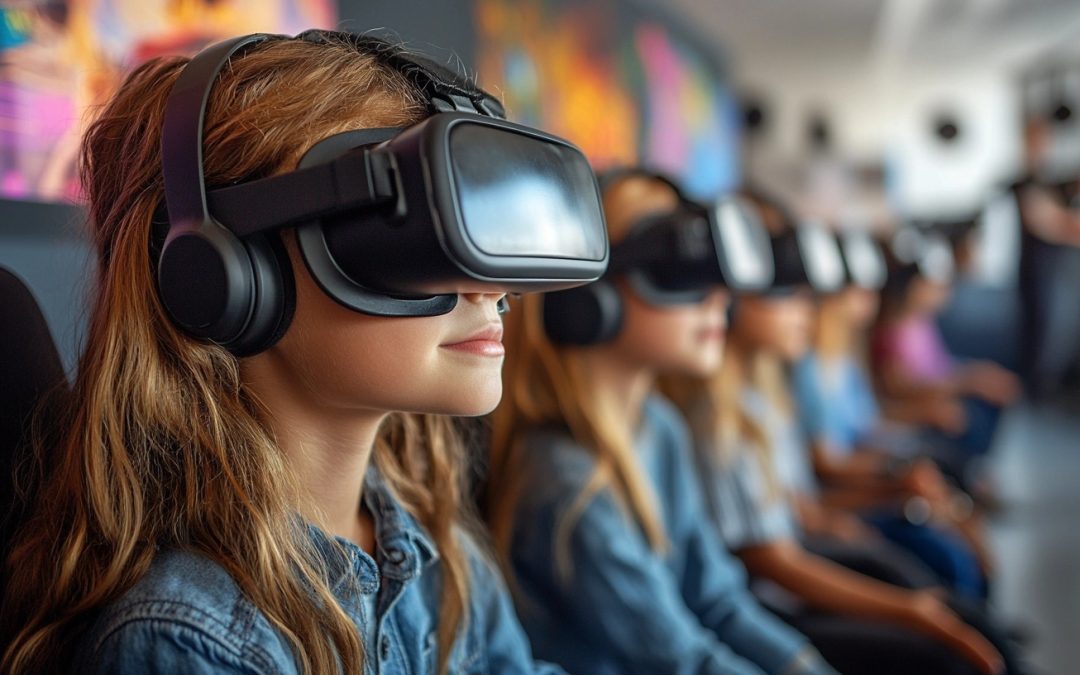
Virtual reality (VR) and augmented reality (AR) are creating unprecedented learning opportunities. With VR, students can “travel” to historical landmarks, explore space, or even delve into the microscopic world of molecules and atoms. AR enables students to interact with virtual objects in real space, making learning more engaging and enjoyable than ever before.
Practical applications of smart technology in education
Smart technology has numerous real-world applications that are transforming the way education is delivered and received. Schools around the world are adopting these technologies to provide students with enhanced learning experiences, and these advancements are reshaping traditional classroom settings in exciting ways.
- AI-powered tutoring systems:
AI is being used to develop intelligent tutoring systems that provide personalized feedback and guidance to students. These systems can help students understand complex concepts by breaking them down into more manageable parts, offering tailored suggestions and resources for improvement. AI tutors are particularly beneficial for subjects like mathematics and science, where individualized attention can significantly enhance understanding. - Gamification in learning:
Gamification—the use of game design elements in non-game contexts—is another innovative application of smart technology in education. By incorporating challenges, rewards, and interactive elements, gamified learning platforms make education fun and motivating for students. Gamification encourages children to stay engaged and persevere through difficult topics, as they are incentivized to complete levels and earn rewards. - Remote learning and collaboration platforms:
The COVID-19 pandemic has accelerated the adoption of remote learning technologies. Schools and universities have turned to platforms like Zoom, Google Classroom, and Microsoft Teams to continue their operations. These platforms facilitate not only live video classes but also real-time collaboration, enabling students to work together on group projects regardless of their physical locations. Remote learning has opened up new possibilities for global collaboration, giving students the opportunity to connect with peers across the world.
The role of technology education in preparing for the digital future
As the world increasingly relies on digital technology, preparing children to succeed in the future requires an effective and intelligent education system. Technology education not only teaches children basic digital skills but also equips them with crucial abilities to thrive in a digitalized world.
- Developing digital skills from an early age:
Today’s children need early exposure to technology to develop essential digital skills such as coding, problem-solving, and critical thinking. Coding programs for children have become widely popular, helping them familiarize themselves with programming languages and thus laying the foundation for future careers in technology. - Enhancing collaboration and creativity:
Smart technology in education not only delivers knowledge but also helps children develop important soft skills such as collaboration, communication, and creativity. Online group projects, creative technology competitions, and international collaborations through digital platforms have allowed children to broaden their horizons and build effective teamwork skills. - Shaping future careers:
Future industries will be heavily influenced by technology, and many current jobs may disappear. Smart education, supported by technology, helps children not only learn traditional subjects but also equips them with new skills needed for emerging careers, such as data analysis, project management in tech, and mobile app development. Early exposure to new technologies ensures children can adapt and succeed in the digital job market of tomorrow.
Challenges and opportunities
Although smart technology offers enormous benefits in education, there are some challenges in its implementation and application:
- Technological disparity:
Not all children have access to advanced technology. In many countries, particularly in rural and remote areas, inadequate technological infrastructure and limited internet access can hinder the development of smart education. Closing the technology gap and ensuring all children have the opportunity to learn in a digitalized environment is a crucial challenge. - Data security and privacy:
As children participate in online educational systems, data security and privacy become primary concerns. Technology companies and educational organizations must collaborate closely to develop secure solutions to protect children’s data and ensure that their personal information is kept safe. - Teacher training:
The success of smart education depends not only on technology but also on the capabilities of teachers. Educators need training to understand and effectively use technological tools in teaching. They must also be skilled at creatively combining traditional pedagogy with digital teaching methods.
Conclusion
Smart technology and education are opening up a new world for the younger generation, bringing them closer to the digital future. From interactive smartboards and virtual classrooms to AI and virtual reality, all are helping children access knowledge in more creative and effective ways. Moreover, technology education not only prepares children with the essential digital skills but also builds a foundation for their holistic development in an ever-changing world.
The application of smart technology in education is not just a trend but a necessary step to ensure that today’s youth are equipped with the skills and knowledge needed to become the leaders of tomorrow in a digitalized future.